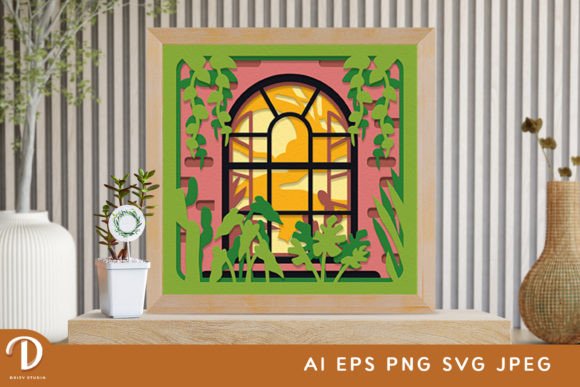
Plants on the Window 3D Shadow Box SVG Guide
There is a distinct satisfaction in transforming a flat digital file into a tangible object that commands attention. For crafters, small business owners, and interior design enthusiasts, the Plants on the Window 3D Shadow Box SVG represents more than just a cutting file; it is a blueprint for creating depth and atmosphere. This specific design, often referred to as the Green House 3D Shadow Box, captures the serene allure of a greenhouse oasis, rendering intricate botanical details in a layered format that invites the viewer to look closer. Whether you are a hobbyist looking to upgrade your home decor or an entrepreneur seeking a unique product line, understanding the versatility and technical nuances of this template is essential for maximizing its potential.
At its core, this project is a study in layering. The template typically arrives as a square composition, measuring approximately 20.32×20.32 cm (8x8 inches), designed to be cut from cardstock or specialty paper. What sets the Plants on the Window 3D Shadow Box SVG apart from standard silhouette designs is its complexity and intentionality. With seven distinct layers, the file creates a convincing illusion of three-dimensionality when assembled. Each layer plays a specific role: some form the structural frame of the window, others provide the lush foliage in the background, and the foreground layers add definition and shadow. This thoughtful separation allows light to pass through selectively, creating natural shadows that change throughout the day if placed near a real window, or when illuminated artificially.
Technical Specifications and File Versatility
When evaluating digital assets for commercial or personal use, file compatibility is paramount. This particular shadow box template is delivered in a comprehensive suite of formats, ensuring it integrates seamlessly into various workflows. You will typically receive the design in AI, EPS, PNG, SVG, and JPEG formats. The inclusion of the SVG file is critical for users operating electronic cutting machines like Silhouette Cameo or Cricut Explore. These machines read the vector paths within the SVG to execute precise cuts, preserving the delicate connections between leaves and window panes that would be nearly impossible to achieve with a standard printer.
For those without access to automated cutters, the high-resolution PNG and JPEG files (often provided at 3000 x 2000 pixels or higher) allow for manual crafting. Using an art knife and scissors, skilled hands can replicate the machine-cut precision, though it requires more time and patience. A key technical consideration is resizing. While SVG files are infinitely scalable, it is vital to maintain the original aspect ratio. Distorting the image by stretching it horizontally or vertically will misalign the layers during assembly, ruining the 3D effect. The design is optimized for the 714 x 714 pixel canvas size in vector formats, which translates perfectly to physical dimensions without loss of quality.
Creative Applications Beyond Home Decor
The most obvious application for the Green House 3D Shadow Box is as a framed wall decoration. When housed in a deep-set frame, often called a shadow box frame, the layers create a stunning focal point for living rooms, offices, or nurseries. However, limiting this asset to static wall art overlooks its dynamic potential. One of the most transformative uses involves converting the piece into a lightbox. By inserting LED strip lights between specific layers—usually behind the foliage but in front of the back panel—the design glows with a soft, ethereal light. This modification turns the artwork into a functional night light or an atmospheric accent for event spaces, cafes, and boutiques.
For educators and workshop leaders, this template serves as an excellent teaching tool for spatial reasoning and design principles. In a classroom setting, assembling a seven-layer paper model helps students understand how depth is constructed in two-dimensional media. It bridges the gap between digital design and physical engineering. Similarly, marketers and brand strategists can utilize this aesthetic for pop-up displays or limited-edition packaging. Imagine a high-end botanical skincare brand using a miniature version of this shadow box as part of their holiday gift set. The tactile nature of the paper layers conveys a sense of care and craftsmanship that flat printing cannot match.
Commercial Viability for Makers and Entrepreneurs
If you are a freelancer or small business owner selling on platforms like Etsy or at local craft fairs, the Plants on the Window 3D Shadow Box SVG offers a strong return on investment. The material cost is low—primarily cardstock, glue, and a frame—while the perceived value of a hand-assembled 3D piece is significantly higher. You can differentiate your products by experimenting with paper textures and colors. While the default might be various shades of green to mimic a real greenhouse, swapping in metallic golds, deep midnight blues, or pastel tones can create entirely new product lines targeting different demographics.
Efficiency in production is another benefit. Once you have mastered the assembly process for one unit, creating duplicates becomes faster, allowing for batch production. Furthermore, because the file is digital, there is no inventory risk; you only produce what you sell. For custom orders, the scalability of the SVG allows you to offer different sizes to clients, provided you adjust the frame and material thickness accordingly. This flexibility makes it a robust asset for a diverse portfolio of handmade goods.
Assembly Tips and Best Practices
Success with this project hinges on preparation and the right adhesives. Before cutting, ensure your machine blades are sharp to handle the intricate details of the plant fronds and window mullions. When assembling, the choice of adhesive matters immensely. Liquid glue can warp thin cardstock and create visible bumps, so double-sided tape or foam adhesive squares are highly recommended. Foam tape is particularly effective as it not only bonds the layers but also maintains the consistent spacing required for the 3D effect to work properly.
Color theory also plays a role in the final appearance. Using slightly darker shades of paper for the rearmost layers and lighter tones for the front can enhance the perception of depth, even before lighting is applied. Conversely, a monochromatic scheme emphasizes the play of light and shadow. If you choose to backlight the piece, test the opacity of your paper first; some heavy cardstocks may block too much light, while very thin paper might reveal the adhesive marks. It is always wise to create a prototype before committing to a final sale or permanent installation.
Ultimately, the Plants on the Window 3D Shadow Box SVG is a versatile tool that blends technology with traditional craft. It offers a pathway to create sophisticated, layered art that resonates with modern aesthetics while honoring the tactile joy of paper crafting. Whether used to brighten a corporate office, teach design concepts, or build a profitable side hustle, this template provides a solid foundation for creativity. By paying attention to the details of assembly and exploring innovative applications like lighting integration, creators can unlock the full potential of this verdant, glass-encased oasis.