Evaluating the BAT 3D Paper Decor Template: A Practical Guide to Digital Papercraft Files
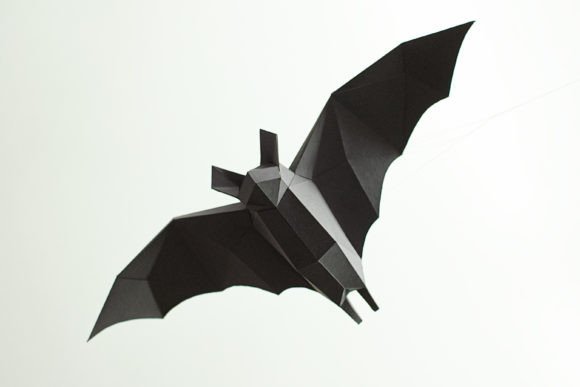
For hobbyists, educators, and event planners looking to add dimension to their spaces without the high cost of resin casting or 3D printing, digital papercraft templates offer a compelling middle ground. The BAT - 3d Paper Decor Template represents a specific category of these resources: a downloadable, multi-format kit designed for precision assembly using standard crafting tools or automated cutting machines. Unlike pre-cut kits that arrive in the mail, this digital approach provides immediate access to the source files, allowing users to control the material quality, scale, and production timeline. Understanding whether this specific template fits your project requires a close look at its file structure, assembly complexity, and how it compares to other methods of creating three-dimensional wall art.
File Formats and Production Flexibility
The primary distinction of the BAT - 3d Paper Decor Template lies in its dual-format delivery system. The download includes a ZIP archive containing both a .pdf file for the main template and a .dxf vector file. This combination is critical for users evaluating their production capabilities.
The PDF format is universally accessible and ideal for those working with home printers. It is optimized for standard paper sizes, specifically A4 and A3. For the average crafter, this means the barrier to entry is low; if you have a printer and thick colored paper, you can begin the project immediately. However, printing at home introduces variables regarding paper weight compatibility and print alignment that must be managed manually.
In contrast, the inclusion of the DXF file elevates this template for users with access to digital cutting machines (such as Silhouette, Cricut, or laser cutters). Vector files allow for infinite scalability without loss of resolution. While the standard assembly yields a panda head measuring approximately H20 x W25 x D5 cm on A4 paper or H30 x W35 x D5 cm on A3, the DXF format empowers users to resize the model significantly. If a project requires a large-scale installation piece rather than a shelf ornament, the user can simply adjust the dimensions in their cutting software. This flexibility is a significant advantage over static PDF-only templates or physical kits, which lock the user into a predetermined size.
Assembly Complexity and Structural Integrity
When comparing papercraft options, the balance between aesthetic detail and assembly difficulty is a major decision factor. The BAT - 3d Paper Decor Template consists of 3 pages comprising 17 distinct parts. In the realm of 3D modeling, this part count suggests a "low-poly" aesthetic. Low-poly designs utilize flat geometric planes to approximate curves, resulting in a modern, faceted look that is currently popular in interior decor.
The instruction set relies on a numbered gluing system, where parts are joined according to marked indicators. This method is standard for papercraft but requires patience and dexterity. The trade-off here is time versus cost. Unlike foam board cutouts that might snap together or require minimal adhesive, this template demands precise folding along indicated lines and careful application of glue to tabs. The result, however, is a hollow, lightweight structure that maintains rigidity through its geometric form.
Users should note that the final depth of the model is relatively shallow (5 cm). This makes it suitable for wall mounting or shelf display but potentially less impactful as a freestanding floor sculpture unless multiple units are clustered. For those comparing this to clay modeling or 3D printing, the paper version lacks the organic smoothness of clay or the solid density of printed plastic. However, it offers a unique textural quality and the ability to use metallic, matte, or textured cardstocks that would be difficult or expensive to replicate with other mediums.
Material Considerations and Durability
A crucial aspect of evaluating any papercraft template is the dependency on user-supplied materials. The instructions specify cutting parts from thick colored paper. This is not merely a suggestion but a structural necessity. Standard copy paper (80 gsm) will likely fail to hold the shape of a 3D object of this size, leading to sagging or collapse at the seams.
To achieve the intended result, users should source cardstock in the range of 160 to 250 gsm. This thickness ensures that the folds remain crisp and the glued tabs provide sufficient surface area for adhesion. When comparing this to pre-made decor, the advantage is customization; you can match the exact Pantone color of a room or use patterned paper for a unique effect. The limitation, conversely, is environmental sensitivity. Paper is susceptible to humidity and direct sunlight, which can cause fading or warping over time. Therefore, the BAT - 3d Paper Decor Template is best suited for indoor environments with controlled climates, whereas resin or plastic alternatives might withstand outdoor conditions better.
Scalability and Customization Potential
One of the strongest arguments for choosing a digital template like this over a physical kit is the potential for iteration. Because the source files are provided, the user is not limited to a single attempt. If a mistake is made during cutting or gluing, the parts can be reprinted instantly without waiting for shipping or paying additional fees.
Furthermore, the ability to modify the DXF file opens doors for advanced customization. Experienced users can alter the geometry slightly, add mounting brackets directly into the vector design, or nest the parts more efficiently to reduce paper waste. For educational settings, this makes the template an excellent resource for teaching spatial reasoning and basic CAD principles. Students can experiment with scaling the model up or down to understand the relationship between 2D patterns and 3D volume.
Decision Factors: Is This Template Right for You?
Determining whether the BAT - 3d Paper Decor Template is the optimal choice depends largely on your available tools, time budget, and desired outcome.
This template is likely the right choice if:
- You possess a digital cutting machine and want to leverage vector files for precision.
- You need a specific size that differs from standard retail decor options.
- You enjoy the process of manual assembly and value the therapeutic nature of crafting.
- You are working with a limited budget but have access to basic crafting supplies.
- You require a lightweight solution for hanging on drywall or temporary event setups.
You may need to consider alternative options if:
- You require a weather-resistant outdoor decoration.
- You lack the patience for detailed gluing and folding of 17 separate components.
- You need a solid, heavy object rather than a hollow shell.
- You do not have access to thick cardstock or a reliable printer/cutter.
Final Thoughts on Digital Papercraft
The shift toward digital assets in the crafting world empowers creators to take control of the production process. The BAT - 3d Paper Decor Template exemplifies this shift by offering a versatile, scalable, and cost-effective route to creating 3D art. While it demands more active participation than buying a finished product, the return on investment comes in the form of customization and the satisfaction of building something from scratch. Whether utilized for a quick weekend project on A4 paper or a large-scale installation via resized DXF files, this template serves as a robust tool for anyone looking to explore the intersection of digital design and tactile craftsmanship.